
After the fire, the moat of Age Age software doesn't exist?
Let's start with a judgment that may not be very popular:"The code is complicated so it can't be copied." The moat did collapse.But the "software without moats" is an over-reaction — one of the ones that collapsed and the one that was already the most vulnerable.
A few things that have happened in the past week are just as clear about this crack.
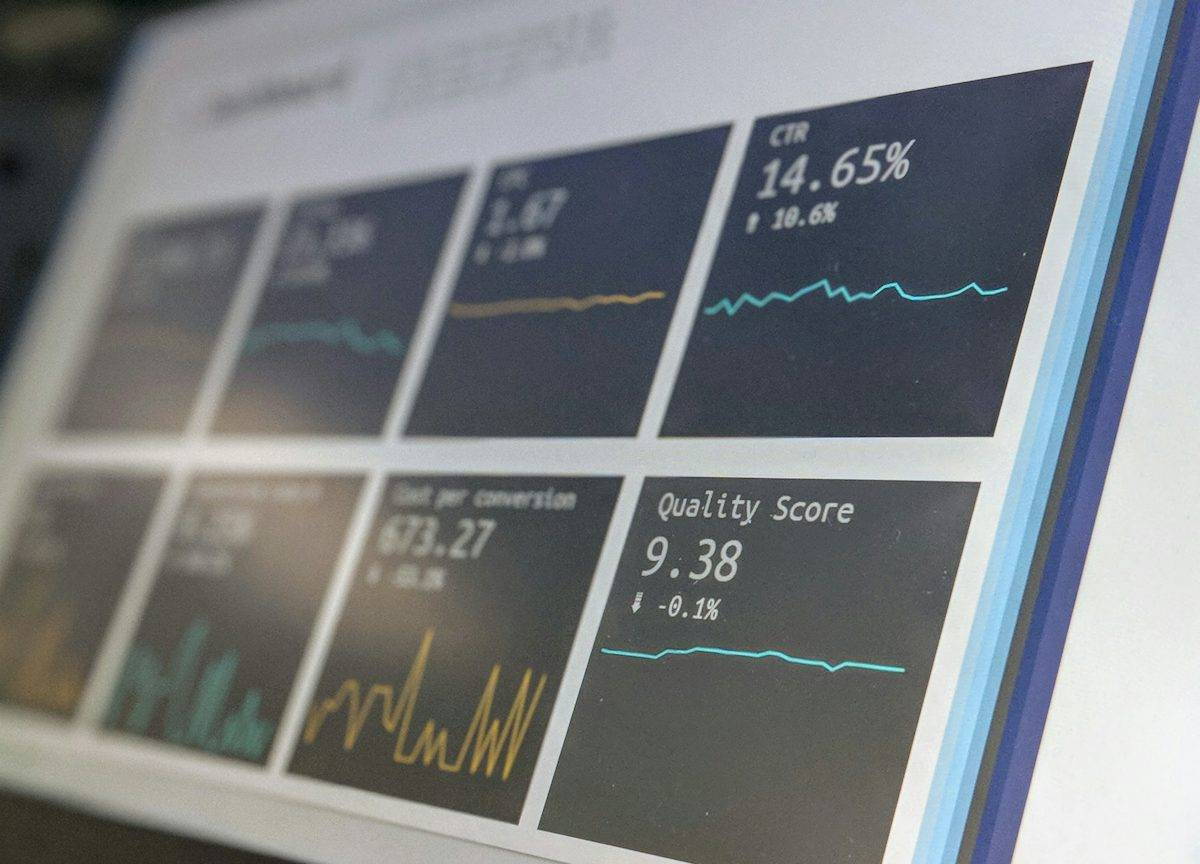
Four signals in a week.
These signals come from public reporting and community discussions, and can be seen alone as coincidences.
- An asterisk curve for REA: This MCP tool, which allows the reverse application of AI coding anent, according to GitHubTrending, rose by about 25,000 Stars a day on October 10th, then again by about 25,000 on October 11th, and then continued to climb to 100,000 quantities. In contrast, I've measured the real figures for today. 16.1 million Star, 37.8 million ForkI don't know.
- The pace of the inverted game is compressed: A team of volunteers completed the complete inversion of the N64 game "Snowboard Kids" in 84 days; AI did not write code for them, but it accelerated the renaming of symbols, recognition of functional boundaries, recommendation of C equivalents.
- PS2 static rewrite: PS2Recomp Project attempts to translate the PS2 game static into modern C++, bypassing the simulator directly out of the PC version. A key detail was mentioned in the report — 789 PS2 issues were issued with debugging symbols.
- The manufacturer blinked first.: Thales released on October 1st the Setinel Envelope Plus, dedicated to defense of AI-assisted reverse engineering. The product was a few days before the outbreak.
The defence party products were released before the attacker's tools, which in itself was the strongest signal: the market had predicted that this would happen.
II. Which three assumptions were removed
For decades, the default defense logic of commercial software has been: “Theoretically, they can reverse us, but they need a team of experts for months, and when they're done, we've got several rounds of the next edition.” This logic is based on three hypotheses:
Scenario 1: Reverse requires deep expert knowledge
REA straight through the threshold. A primary developer with Claude Code can now analyse the binary system that has required 10 years of experience to compile. The report cites a study of NDSS 2026 (a sample of 153 practitioners): LLM support significantly reduced the professional gap, with a newer understanding rate of about 98 per cent and a level of specialists.
Scenario II: Reverse costs are higher than the value available
When AI angent pushed the function-level analysis from "days" to "minutes," the economy was turned over. When the cost of these moves is changed from “consultants cost tens of thousands of dollars” to “API calls a few cents”, all assumptions about “defensibility” are recosted.
Scenario three: Compiled binary is not transparent
Modern LLM can extrapolate structure models, identify algorithms, and give high-level reprogramming suggestions from back-compilation outputs. It doesn't need to restore the original source code -- just understand what the code is doing.

III. But "no moat" is an overreaction.
The conclusion was pushed from a “complex moat collapse” to a “software is no moat”, with a big leap in the middle. In fact, instead of being weakened, several types of moats are worth more because they are cheaper in reverse:
- Service logic: Never leave the logic of your own infrastructure, the reverse tool cannot reach. Data conduits, model weights in the form of API, real-time individualized engines, network effects are all defensive.
- Data and network effectsThe competition can read your code, but not your user size, behavioral data, bilateral networks. These are time and scale gained, not duplicates.
- Operating and cost structure: The same function, who can do unit costs lower, more iterative, more stable service, is a bit more than code.
- Branding, trust and compliance qualifications: Business clients often buy not code, but trust, SLA, audit and accountability.
In other words:Client intelligence is no longer a secret, but service assets.If you put competitiveness in the “distortive binary that the user gets”, it is dangerous; if you put competitiveness in data, networks, operations and trust, this change is helping you — because it is easier for the opponent to copy the “face function” but still does not copy the “bottom capacity”.
IV. Is confusion useful? It works, but only buys time.
That is the easiest point to misread. Thales has an eye-opening benchmark in its product promotion: the unprotected application exposed 8 out of 10 loopholes to AI angent; and after the Sentinel Envelope Plus protection, 0 was found - at the cost of angent consuming 970 times more token and running for nearly seven hours.
• Need to qualify:This is self-measured by the manufacturer and has not been reproduced independently.And Thales' own case is about making the attack more difficult and expensive, not impossible. In August 2026, Quarkslab wrote on the other side: Modern confusion can mislead the AI analysis by making the anti-compilation output appear to be structured in a way that is not in line with the actual act. But the brackets in the title of that article, “or at the Least Triing To”, have shown how much confidence the defense itself has.
The conclusions are clear:Confusion is buying time, not safety.A few months of time difference is valuable if you have a fast pace; but don't mistake the delay for “stopping”.
V. THE LEGAL LINE IS SO WONDERFUL.
The state of law is currently uncertain and must be honest. It has been established that the use of robots to capture data, impersonate users and inject malicious tips into the AI system may constitute an “inappropriate means” under commercial secrecy law. But REA, a tool like this, does not capture, does not pretend, does not inject — it analyses the legitimate binary system acquired by users, the same thing as the manual behaviour of security researchers for decades.
The anti-circumvention clause of article 1201 of the DMCA prohibits circumvention of technical protection measures, but provides for exemptions for security research, interoperability and reverse engineering; the REA statement also states that its use is limited to “legitimate reverse engineering research, analysis and reconstruction”. It has been analysed that the line between the AI era of “legitimate means” and “improper means” is “increasingly blurred” — and that ambiguity itself is a risk: an enterprise cannot expect a law that is still changing to deter it.
Six things to do.
- Use client code as a public document: The logic of sending software to user devices should be treated as “readable by competitors within a few days”. Structure selection, algorithms and optimization techniques are no longer secret.
- Move the moat to service.The advantage of surviving is the logic of never leaving your infrastructure.
- Update threat modelIf your security assessment also assumes that “reverse requires a skilled analyst for a few weeks”, it is wrong. The budget is budgeted as a baseline counterpart.
- It's not a moat.: Buy time, don't be a wall.
- Speed up the pace.If your opponent can read your current version in a few days, the only defense is that you're on the next one. The iterative speed itself became core competitiveness.
- Keep an eye on legal developments.The intersection of AI, reverse and commercial secrecy laws is rapidly evolving, requiring legal advice that understands both technology and emerging jurisprudence.

VII. A larger picture
REA is not just a reverse tool; it is a signal that the AI angent ecology is mature enough to package “multi-step technological processes that used to require years of expertise to complete” into a npx command.
It's a reverse project today, and tomorrow it's the re-establishment of the architecture for the discovery of the size gap, the automation of the expluit generation and the systematization of the competition. AI's programming assistant is not just writing the code, it's reading the code — including those that it shouldn't have seen.
Back to the title question: Does the Agent-era moat no longer exist?
What collapsed was the already fragile river of “complexity”; what left behind were data, network effects, service-end assets and trust — exactly what AI could not copy.