
ChatGPT libera marcas de água de texto, velocidade GPT-6 50%
Poucos fabricantes de IA acreditam que "quantidade para qualidade" é um deles. Em 5 de outubro, após 12 dias de uma série de conferências de imprensa, o chefe do OpenAI Codex, Thibault Sottiaux, anunciou mais uma renovação de 28 dias: Para cada um dos dias seguintes, a equipe ou emite uma atualização que tem um valor claro para a maioria dos usuários Cordex ou ChatGPTwork ou executa uma substituição em grande escala.
The event came to Day 1, OpenAI with three changes in one breath: the default production rate of the GPT-6 series was increased by about 50 per cent; the invisible text-printing, called TextGrain, appeared in response to the EU ' s AI Act ' s requirement that content machines be identifiable; and ChatGPT advertising introduced more visual advertising. Speed up, compliance, commercialization, three lines.
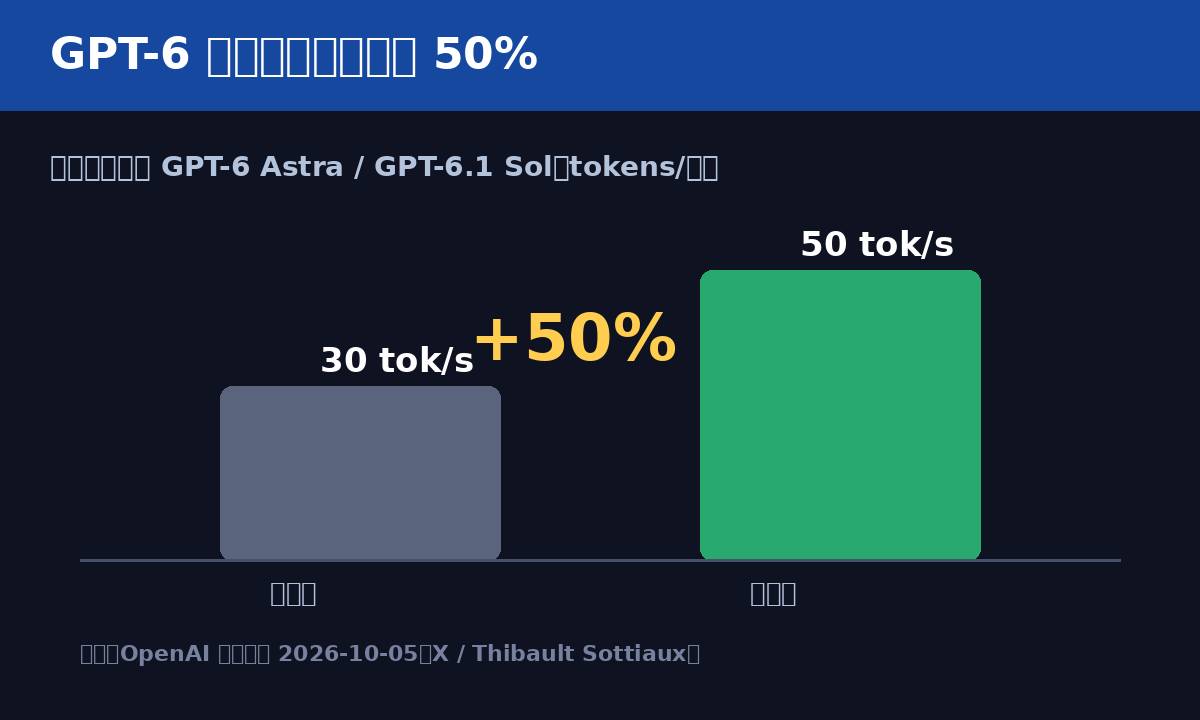
Velocidade padrão GPT-6 aumenta 50%: de 30 token para 50 token por segundo
De acordo com Tibo, por assinatura de GPT-6 Astra e GPT-6.1 Sol, a taxa de geração padrão aumentará em cerca de 50%, de 30 tokens por segundo para 50 tokens por segundo, sem que o usuário tenha que ajustar as configurações.
Este impulso abrange não só o próprio produto de assinatura da OpenAI, mas também as ferramentas parceiras do ChatGPT, incluindo OpenCode, Pi, Ap e Devin. Os usuários usam a conta ChatGPT para usar a capacidade de assinatura nessas ferramentas, e dentro do mesmo intervalo de ajustes, as mudanças se tornam efetivas dentro de duas horas após a publicação.
Para o trabalho que requer interação contínua com o modelo — leitura cruzada, modificação, teste, correção, busca e geração de informações várias vezes — a experiência cumulativa varia consideravelmente após um período de espera único.
TextGrain Invisible Text Watermark: Deixe a estatística "Fingerprint" para o texto de IA
A lei de IA da UE exige que o fornecedor de IA gerador permita que o texto gerado seja identificado de forma legível por máquina. OpenAI oferece uma tecnologia chamada textGrain: Não marca o canto de texto, nem contém caracteres ocultos. Em vez disso, impõe um sinal estatístico invisível ao modelar palavras. A ferramenta de detecção determina se um texto contém marcas de água OpenAI procurando por tais sinais.
O lançamento do ritmo está em três etapas: a partir dessa data, os clientes globais da API podem iniciar marcas de água de texto para modelos selecionados (desligamento padrão API); nas próximas semanas, a saída de texto elegível do ChatGPT e Cordex em todos os pacotes da União Europeia será adicionada às marcas de água invisíveis; não será definida como um padrão global no início. A OpenAI também planeja abrir esta tecnologia para outros.
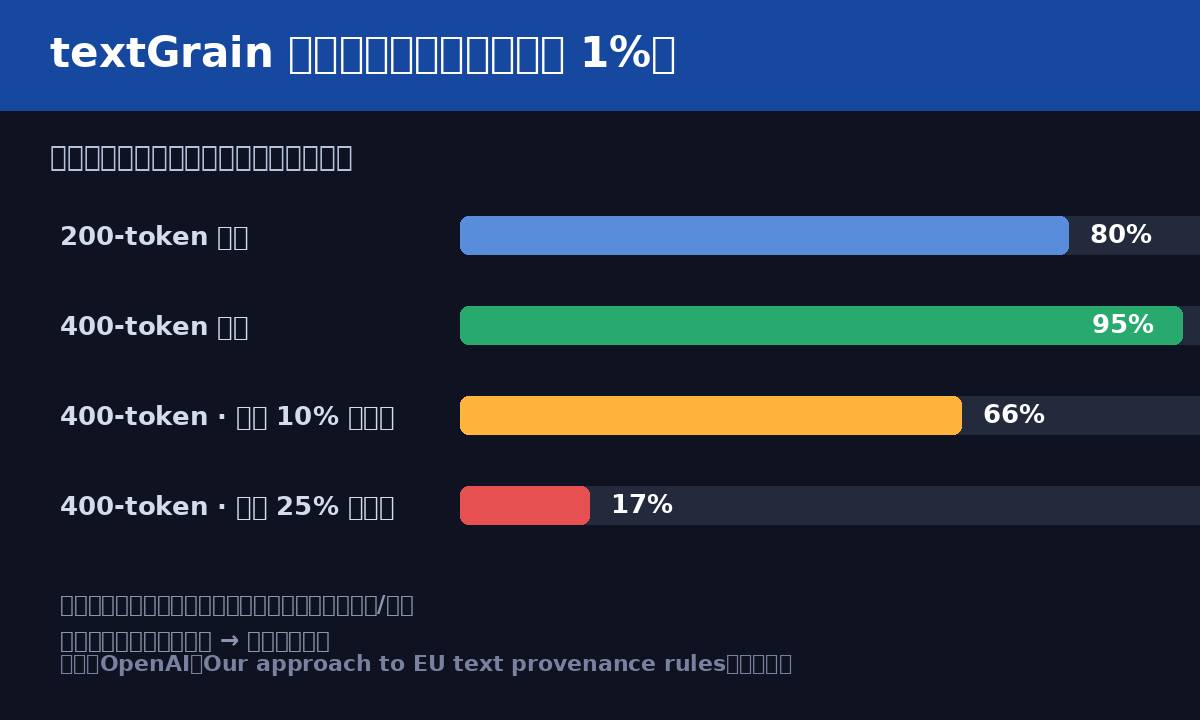
Oficialmente, reconhece-se que as marcas de água fornecem pistas, mas são muito limitadas.
Under the 1% target misreporting test, the detection tool is able to identify approximately 80% of the 200-token watermark text, increasing the length to about 95% of 400 token; and the detection performance is significantly lower for small expressions such as mathematics. The editing also weakens the signal: in the 400-token text test, the 10% word is replaced by synonyms, the detection rate is reduced from about 92% to 66%; after the 25% replacement, only 17% is left.
OpenAI ' s official assessment states that textGrain is even more than other programs, including Google Syndium, but it also clearly lists the boundaries of watermarks: it detects watermarks that do not indicate how much judgement, editing and creativity humans have invested in, nor on which to determine the authenticity of copyright, responsibility or content; it does not relate to specific users, accounts, hints or conversations; and, in turn, it does not prove that the text was done independently. Since misreporting and underreporting still exist, testing tools are temporarily open to approved researchers and professional bodies.
Em termos de desempenho, OpenAI não observou diferenças significativas na inclusão de marcas d'água em seus testes basais para avaliação de Astra: Índice de Inteligência de Análise Artificial foi de 49,57 a 49,76 pontos, GPQA Diamond 94,44 a 93,94% e Terminal Bench 4,0 a 56,06%.
Also on the same day: a visual advertisement to generate scenes, a weekly business of 1.2 billion people.
OpenAI, the same day, ChatGPT reached 1.2 billion people a week. The new form of visual advertising will begin with testing in the United States later this month, showing how the selection is presented in the context of ChatGPT's production of pictures, and how to use them. Advertisements are clearly marked, separated from images that are being generated and do not affect ChatGPT responses.
OpenAI has also expanded its advertising attribution tool to connect conversion data with platforms such as Highouch, Telium and LiveRamp. Early data from several groups of collaborators: Weightwatchers on ChatGPT Ads had 15.3 per cent lower share-takers than their combined-paying search benchmark; 67 per cent of the health brand Dose's incremental purchases came from new customers; and 93 per cent of Portland Leather's visitors from ChatGPT Ads were new visitors.
Uma pequena observação.
The three changes in Day 1 coincided with the three current lines of OpenAI: making paid users feel that subscriptions are more valuable, explaining to regulators where AI's content comes from, and turning the growing size of users into a business that advertisers are willing to pay. Beyond the model, the AI platform is getting closer and closer to what we know about the Internet. 28 Days of Renewed Commitment has only just begun, and it is worth looking forward to what will follow.