
What is it? AI Application of Impact Assessment Template Dismantling in Hong Kong's Ethical Artificial Intelligence Framework
Aqueles que fazem arquivos de governança de IA provavelmente viram esta palavra:Avaliação do impacto da aplicação de IAI don't know. It is not an academic abbreviation game, but a practical template given by the Office of Digital Policy (DPO) of the HKSAR Government in the Ethical AI Framework Framework to assess the potential impact of AI applications on users and society throughout the life cycle. The first edition of the Framework in April 2021 is currently available in December 2025, in 2.0, and official PDF can be downloaded from digitalpolicy.gov.hk.
I. Aiaia, o que é?
A definição oficial é muito restrita: AAIIA é usada para avaliar aplicações de IA, mas não é a única maneira de usá-la.Assegurar a gestão do impacto das IA no ciclo de vida completo e ter em conta os princípios pertinentes em matéria de IAI don't know. It is placed in chapter 5 of the framework, "AI Access", with a complete template in appendix C.
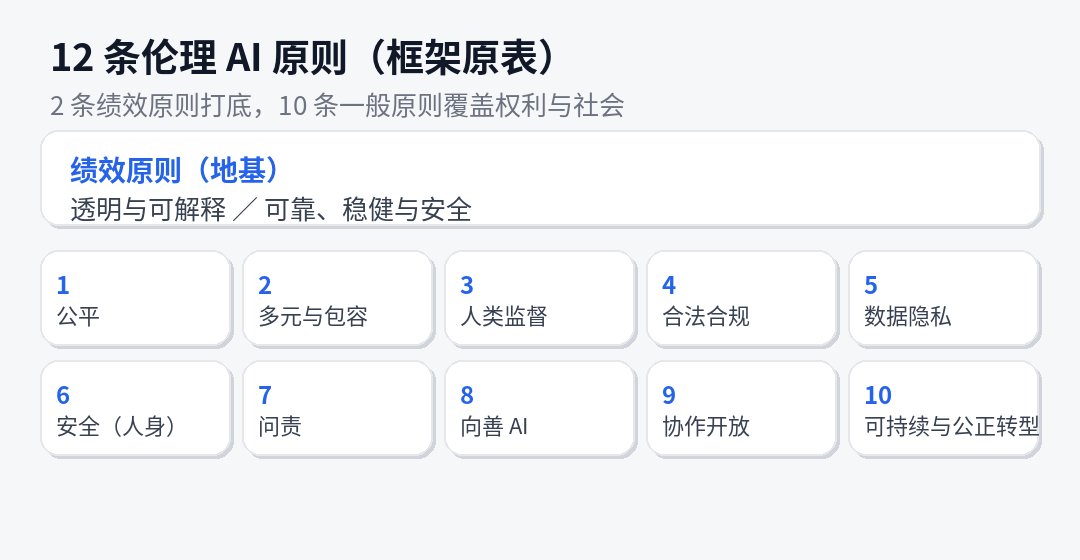
It is based on the 12 AI principles of ethics in the framework. These 12s are in two layers:2 Princípios de desempenho(b) (Transparency and interpretability, robustness and security) is the basis of the ground and, failing that, other principles cannot be validated;Princípios gerais(Fairness, Plural Inclusiveness, Human Oversight, Legal Compliance, Data Privacy, Personal and Psychological Security, Accountability, Good AI, Collaboration Open, Sustainability and Justice) is traced back to the Universal Declaration of Human Rights and relevant Hong Kong legislation, where data privacy directly corresponds to DPP 1-5, which is the subject of the Personal Data (Privacy) Ordinance.
ii. Not a single tick, but a run with the life cycle
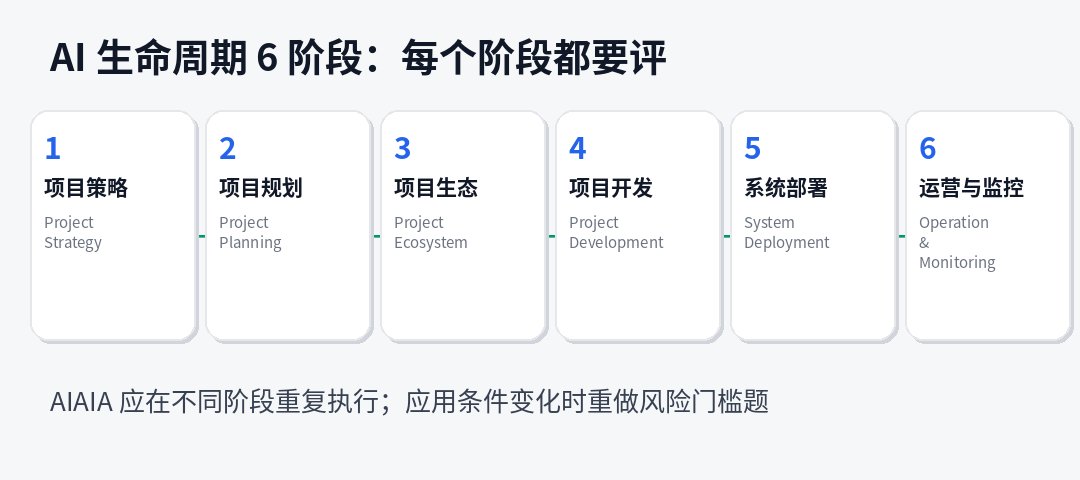
AIIA covers six phases of the AI life cycle: project strategy, project planning, project ecology, project development, system deployment, operation and monitoring. Templates can be updated as a live document throughout the process, but the framework requires 4 nós chave para revisão formalState 1 Review (strategy), State 2 Review (planning/analysis design), State 3 Impact Review (deployment), State 4 Post-Release Review (transport), each slot; and to be repeated at least once a year or during major changes.
iii. Template four components and "high risk" Line
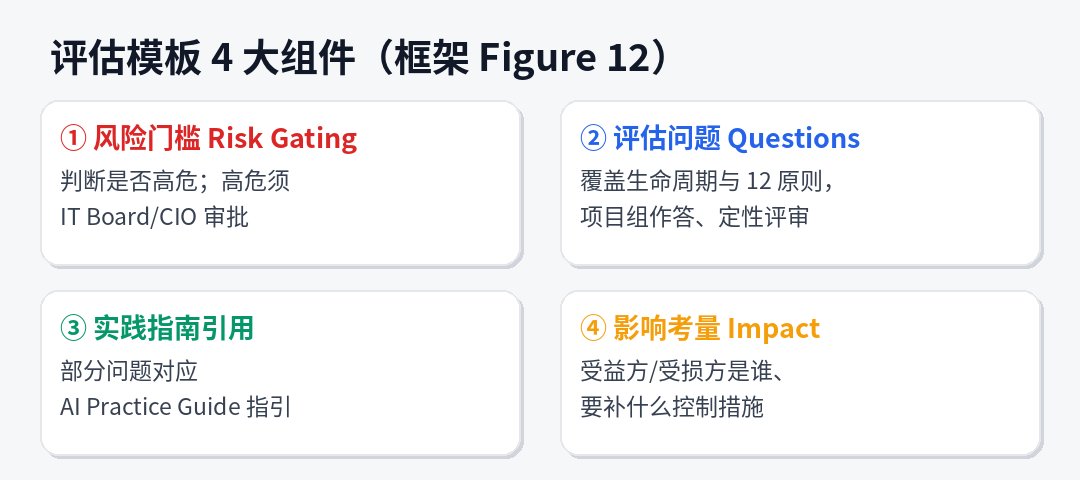
Modelo composto por 4 componentes (Framework Figura 5):Gating de Risco– A equipe do projeto respondeu a um conjunto de perguntas, caracterizando o projeto como “alto risco” ou “não alto risco”;Questões de avaliação- Appendix C has a total of 58 questions, which are allocated to project teams by stage, covering life cycle and 12 principles;Referência ao Guia de Prática— algumas das questões correspondem a controlos específicos no Guia de Práticas de IA;Considerações sobre o impacto- Identificar quem beneficia, quem danifica, que controles precisam ser adicionados.
The key diversion lies in the approval line: non-high-risk projects are recognized by the Project Steering Committee (PSC/PAT);Uma vez iniciado um teste de limiar de risco, é uma aplicação de alto risco e deve ser revista para aprovação pelo Conselho de TI/ CIOThe third line of defence also requires continuous monitoring of high-risk projects. This is also the difference between AIIA and the Questionnaire — the evaluation findings are directly linked to governance actions.
Como localizar esta ferramenta
Dois lembretes: em primeiro lugar, o Quadro de Inteligência Artificial Ética é um documento orientador para o Bureau/Departamento, e o AIAIA é por sua própria naturezaFerramenta de auto-avaliação e de supervisãoSecond, it is a checklist from an institutional perspective that can also be borrowed from the developers' team — using the 12 principle as an assessment dimension and the risk threshold as a list of red lines in front of the line, more useful than a posteriori ethical statement.
Source: Hong Kong Digital Policy Office, Ethical AI Framework v2.0 (2025-12, first edition 2021-04), digitalpolicy.gov.hk; cross-certification: regulations.ai Hong Kong Framework entry.