
When hackers give themselves a warrant? It's not gonna get the cops out of this operation.
Launching a raid: Revealing the perception of subversion
Long live! In 2025, the Cyber Security Circle staged a frenzied play of hackers giving themselves a warrant. How can a blackmailing gang actively forge a Interpol reward order to “see for attention”? What is even more ridiculous is that they not only pretend to be Europol, but also publish "want themselves" on Telegram, even the police call it "fiction"? And this so-called “reward” is still written at $50,000. Is it true that law enforcement agencies are set up?
Do you believe that? Even if he doesn't hide from the police, how come he's giving himself a wanted notice? In August 2025, a reward announcement from Europol was suddenly circulated on the Internet, targeting the core members of the extortion community's “nobility”-Qilin extortion organizations.[1I don't know.
What's more? Not only did they dare to play, but they also pretended to be Europol, even through the hacker's common Telegram platform, the wave of which made it impossible for the real police — an urgent rumour by Europol: “This is an unofficial release!” [paraphrase]2]
What's really scary? The circular also contains an incipient “summation of 50,000 dollars for members”, which is a backlash by hackers or is there someone else behind it? [Applause]3]
This false announcement, which was disseminated in Telegram, claims that Europol offered $50,000 to follow up on information from the two managers of the organization, which at first glance appeared to look like a complete loophole. Europol quickly made it clear that “this information was unofficially released” and confirmed that it was a farce fabricated by hackers (or maliciously orchestrated by competitors].2I don't know. When top-ranking extortion organizations move from being “wanted” to “false wanted persons”, the wave not only updates the “reverse operation” threshold for cybercrime, but also makes it rare and urgent for international law enforcement agencies to clarify — after all, the police have never seen a hacker so “trapped” as much.3I don't know.
Incident Skin: Follow-up to play-back events and organizational context
Event timeline: from false reward to official rumours
One night in August 2025, a mysterious Telegram channel called @europol cti suddenly blew up... - A false Europol circular was issued here, claiming a reward of $50,000 to two core members of the organization, “Haise” and “Xoracle”, for “coordination of subsidiaries and supervision of extortion activities”. The news, like a bomb that went into a cyber-security circle, was quickly reproduced by a number of cybersecurity media, such as the Australian Daily News, where the topic of "Europol Heavy Cash Wanted Hackers" was painted in the industry.2][3I don't know.
But the farce quickly turned around. On 22 August, the Europol spokesman urgently confirmed to The Cyber Express that the information was a complete fraud, emphasizing that “the information did not come from Europol” and confirming that Telegram had never been used for official announcements, and that the official channels included only Instagram, LinkedIn and Facebook.2][3I don't know. This “wanted play” by hackers themselves ended with a partial “turning car” in the media, a "blacking of a hacker's arrest warrant” in the Internet.
This is not the first time that the tritium organization has been so arrogant. Back to its “black history”, in June 2024, the organization launched a targeted attack on Synnovis, an outsourced laboratory service provider of the British National Health Service (NHS), stealing a large number of hospital and patient data. After the failed negotiations, they did not even follow the “conventional route” of the traditional dark-net leak site, leaking 400-GB sensitive data directly through Telegram, resulting in the interruption of nearly 10,000 medical appointments.[4I don't know. By 2025, the tritium organization had intensified, openly claiming that it had 400+ victims and that its high level of cross-platform extortion software had caused security agencies to suffer.5I don't know.
Official ReminderEuropol has made it clear that its official announcements will never be published through Telegram and that, if information is to be verified, it can be consulted through the official accounts of the Instagram, LinkedIn and Facebook platforms to avoid being misled by false information.
It should be @ your friend who likes to relay the "shock" news, show him who's the real trickster — after all, the hacker who can “do not” the police, and the flute operation does refresh the blackmail organization's “lifting ceiling”.
Organizational background: Raas model and double blackmail strategy
If the black market is compared to a large “criminal chain”, the tritium blackmail organization is definitely the “link owner” of the “coffers”. This group of hackers (formerly known as “Agenda”), which has been active since 2022, uses the “RaaS” model to start up the attack business as if it were a “Black Production Union” store, and if you want to be a hacker and not write your own codes and tools, pay for the full range of assault weapons.6][7I don't know.
How do we split it? The Convergence Policy is rather “flexible”: 80 per cent for unicorns if they extort less than $30,000; more than $30,000, 85 per cent for affiliated hackers and only 15 per cent for unicorns.6][8I don't know. As “headquarters support”, tritium also provides customized “weapons depots”: auxiliary hackers can generate proprietary extortion software with their malicious software builders, and even individualized ransom notices — for example, by writing the name of the victim's company and the amount of the custom ransom, which can be accurately matched even in the time zone [and]8][9I don't know. This “packing-in” model makes hacker attacks that otherwise require a technical threshold a “low-risk, high-return business” open to everyone.
🔗 Knowledge point: Ra's model has caused the hacker threshold to collapse, as in the case of the fraud industry.
In the past, when hackers were able to understand the code and infiltrate, there was now a Raas model, which was like opening up “the number of hackers” — gills providing “sources” (extortion software), “logistics” (attack tools), “post-sale” (technical support) — and auxiliary hackers simply taking responsibility for “client-seeking” (target selection). This division of labour has dramatically increased the efficiency of black production, with 400+ victims declared by 2025 and 356 new cases by 2025 alone.[1]2][7I don't know.
The “membership model” alone is not enough, and the pelicans are ferocious in their “double blackmail” strategy — in short, “both money and life”. The traditional blackmail only forces you to pay for it, while the unicorn plays the combination box: first, copy your core data, then encrypt the system, and then threaten to "disclose the data without paying for it."6][10I don't know.
In June 2024, the British NHS pathology service provider, Synnovis, was beaten with this combination: thorium encrypted its system, demanded $50 million in ransom (more than 60 times the organization's regular ransom) and refused to publish 400 GB data directly on the net — 300 million patients' blood test results, personal medical information, resulting in over 10,000 out-of-patient appointments, 1,710 late operations, and even indirectly in the death of one patient.3][6I don't know. A similar case is that of the leak of Japanese-born car design data in 2025, when the core design drawings were stolen, and the gills were not only extorting ransoms but also threatening to sell them to their competitors, leaving businesses in the dilemma of “paying money, not losing their markets” [para.11I don't know.
This method of “close the business and steal the data to destroy the reputation” has led to a rapid rise in the extortion industry. From its departure in 2022 to the present, its range of attacks extends from medical care and education to car manufacturing, with ransoms ranging from $50,000 to $50 million, and in 2024 it accounted for 5 per cent of the global victims of extortion.[]6][7I don't know. When traditional crime is still “one-on-one,” the tritium has built a standardized black-and-black line with the “membership model + double blackmail”, which may be the real reason why it can “find” the police.
There's a hole in it: three pieces of Conan-style false notice.
Now, detectives, let's get to Conan-kun with a magnifying glass to see how much we can see in this "self-directed arrest warrant" wave of Triple Extortion. I'm not saying much.
Liar scores: This is the first break?
The distribution channel is too pheasant.
Formal Interpol wanted notices are issued only through the official network, the central bureaus of police in member States or an officially certified social account. But what about the false news? The new Telegram channel, @europolcti, was born on the board of the European Police Office (Europol): “We never use Telegram to issue official announcements”, the official platform of which is Instagram, LinkedIn and Facebook with Blue V-certified accounts.
Family, it's like someone's got a "court subpoena" with a microletter. Do you believe it? A channel that can't even be officially certified, the credibility of the message is basically equivalent to a “friends-based fortune-tune commercial”.
♪ That's what I'm talking about ♪
Red light in the bonus unit.
The INTERPOL reward was never used only in legal currencies such as the United States dollar and the euro, after all, bitcoin was a “noun” for money-laundering instruments and could not be touched by a formal institution. What is even more ridiculous is the amount of money — the false wanted notice is only $50,000, and look at the true case: LockBit blackmails software for $10 million and Not Petya attacks related hackers for $10 million. $50,000? I don't know if it's a liar who thinks the police are "financially nervous."

It's like being told to give you a "end of the year" award, and it's settled in a game currency, and it's just five coppers -- small patterns, more acting!
♪ That's the third one ♪
Document format missing stamp
The true Red Notices are “triple security”: standardized numbers (e.g. 2025/XXX), Interpol logos, detailed identification (date of birth, nationality, etc.). But what about the false wanted notice? There was neither a single number nor an official logo, and neither “Haise” nor “Xoracle” referred to had even basic identity information.
It's like having someone show you a college diploma, and there's no school seal, no school number, even the headmaster's signature is "The King next door" -- do you dare to take it to work?
Finally, the focus is on Europol, who has made it clear that “the $50,000 reward is false”. It can only be said that the wave has turned the phrase “throwing and catching thieves” into the phrase “blowing thieves” and suggests that the fraudsters next time supplement “International Criminal Police Office official writing lessons”.
A guide to hole avoidance: a list of actual exercises against fraud
Five identifying points:
How can ordinary people quickly understand disguises in the face of the proliferation of cyber-frauding, especially the charade of “breachers and robbers” like Triple Extortion? The following list of “anti-fraud protection” techniques is used in the form of a mouthpiece plus a case.
Type one: Check the accounts - official information is only for official networks/police, Telegram, Weibo are all wild.
Core logicOfficial information such as wanted notices, reward announcements, etc. from international law enforcement agencies can only be published through authoritative channels. Information such as that of Interpol is published only through its official network (www.interpol.int) or through the police channels of member States, and will never appear on unofficial platforms such as Telegram, the small crowd forum, the Twitter community, etc.3][12I don't know.
Case comparison: It is through Telegram that a false “wanted warrant” is issued, and the European Criminal Police (Europol) has been spreading rumours through the official network within 24 hours of the fraud, and the authority of both channels is clear. [Telegram]3I don't know.
Type two: Listening to accents -- Interpol didn't open the phone mailbox.
Core logicInterpol does not have an open mailbox or telephone, and any call or e-mail claiming that “I am Interpol and you are involved” is fraud. In the formal process, the transmission of information on transnational cases is to be channelled through the national police, and no direct contact will be made with individuals requesting transfers and providing bank card information.[12][13I don't know.
Case comparison: In 2022, the India Call Centre impersonated Interpol, demanding that the victim's transfer be “self cleared” on the grounds of “suspected money laundering” and eventually destroyed by the police. Similarly, the Consulate General of China in New York has specifically warned that telephone calls will not be forwarded to the “International Criminal Police Centre” nor that bank account information will be required.13][14I don't know.
Type III: Look at the wallet - the bonus is more than the TT = money laundering code, and the formal reward is only RMB/US$
Core logic: The formal reward is paid in a manner that is necessarily legitimate and does not designate encrypted currency (such as bitcoin) as the only channel. The essence of the demand for transfers of bitcoin, tedcoin, etc. is the use of anonymous money laundering in encrypted currency, 100 per cent of which is a fraud.3][15I don't know.
Case comparisonThere was a “bitcoin reward trap” in 2018, in which a fraudster forged an “international arrest warrant” claiming to provide clues that he could receive a bitcoin reward, and in fact lured the victim to lose contact with the encrypted currency. In contrast, the formal reward paid by the FBI for extortion of the head of the software often amounts to millions of dollars and explicitly supports the payment of dollars.14I don't know.
Form four: Certificate: Red wanted order with number plus logo, none of which is "three products."
Core logic: The INTERPOL Red Notice has strict formality: it must contain information on standardized numbers (e.g. 2025/XXX), Interpol logos, and standardized photographs, biometrics, etc. of wanted persons.12][16I don't know.
Case comparisonIn the “wanted order” forged by the tritium organization, there is neither a code number nor an Interpol logo, and the document is in rough form and, in the first instance, “three products”. The true Red Notice is available on the Interpol network for reference numbers that are complete and traceable.3I don't know.
Type five: protection-- but whoever makes you "don't tell your family and friends" is a fraud.
Core logicThe liars, who fear the victim's communication with the outside world, often ask you to “don't tell anyone” on the grounds that “cases are kept confidential” and “protect their families”. For example, claiming that "you're suspected of money laundering and telling your family that you're going to hurt them" actually prevents you from seeking help from your family and friends and from breaking the scheme.12][13I don't know.
Case comparisonThe Chinese Consulate-General in New York has repeatedly warned that when a call is made that a child has been abducted, that a family member has been killed by accident, and has been asked not to tell his family, it is important to stay calm and to verify, through official channels, that such a “emergency + confidentiality” scheme is fraudulent.13I don't know.
Sniper.: Check channels, contact details, reward, document format, alert in case of confidentiality. Remember: regular agencies don't rush you, don't keep secrets, don't assign encrypted money, but whoever makes you "quick and quiet" is a liar!
You can see the five main points, no matter how the liar disguises them. In the event of a suspicious situation, it may be useful to check the list one by one, or to call directly 110, the National Anti-Fraud Centre hotline 96110, to render fraudsters inoperable.
Two main channels for reporting: detection and reporting
Remember, "Call the police two steps" and move quickly! Both channels can help you get information straight to the police, regardless of whether there has been fraud or an offshore tip.
Domestic alarm: dial-in line + APP for double insurance
National Anti-Fraud Line 96110It's your first line of response - when dialed, professionals will record key information about fraud techniques, time, money and contact details, whether early warning, anti-fraud counselling or reporting leads. [T]17I'm sorry. If it's customary to operate online,National Anti-Fraud Centre APPThe “I'm going to report” module allows you to fill in the details of fraud, from text-message to transfer records, and to submit all evidence by one key, and to receive police feedback simultaneously.18][19I don't know.
Domestic tippers: When, where and how to be deceived when to report the phone call, remember to record the chat before the APP report, file the seizure of the transfer vouchers, the more complete the evidence, the faster the police handle it!
International leads: Embassy and Consulate assistance + Mailbox to Police
If the fraudster is abroad or if you are abroad,Chinese embassies and consulates abroadWe can coordinate local police intervention. We can call in an emergency.Ministry of Foreign Affairs Global Consular Protection Hotline 12308Help17I'm sorry. The more direct way is throughMailbox for reporting outside the National Central Bureau of Interpol, Ministry of Public Security(interpol.china@mps.gov.cn) Submit leads, bearing in mind the details of the suspect's name, document number, photograph, means of communication, to facilitate accurate police tracking [0][0]20I don't know. In other countries, such as the United States, simultaneous reporting can be made to local institutions, such as Internet fraud seeking IC3 (https://www.ic3.gov/) and identity theft linking to FTC (https://www.identitytheft.gov/)[4], creating cross-border reporting synergies.
Put these channels in the phone memo!**
Professional depth: the reverse marketing and enforcement of hackers
Reverse marketing: hacker's “flow code”
When the blackmail software group plays the "Red Web" route, even the police lamented "the hackers will be able to live." The recent “self-rewarding” operation of the Neptunium Software Organization, known as the black industry's reverse marketing textbook — ostensibly a charade of hacker-wanted hackers — hides a precise flow of liquidity and risk-avoidance logic, living off the dark net as the main “poaching” position.
In the black industry, the topic maker: a dispute for exposure
It's like online red is a hot search on controversial topics, and it's the "black red is red" thing. In recent months, as a “demonstrably leading organization for extortion software”, its spontaneous false reward events, whether stemming from internal conflicts or external speculation, have objectively raised its “visibility” in the underground network.2I don't know. This is not an isolated case: in 2021, the American hacker Pompopurin attacked the FBI mail system and sent 100,000 pranks claiming that “only to point out a loophole” was successful in attracting the attention of the entire network by impersonating an authority to create an incident.21][22I don't know. The “self-rewarding” of tritium is simply an escalation of the game: using the police-rewarded head as a “flow code” to create a discussion boom in the dark web.
Three arrows: the bottom logic of reverse marketing
The platinum operation is not a bloodbath, but a precision targeting of three core objectives:
Darknet “Chamber of Commerce”: Attracting potential partners
By creating the hotness of the topic, tritium is tantamount to free advertising on the net, targeting “affiliates” (subordinate attackers) who want to join the chain of extortion. After all, under the RaaS model, “visibility” is the hard currency of recruiting partners, and the more the attackers join, the bigger the extortion network.2I don't know.
Victims' “screeners”: targeting high-value targets
When a security team or business is interested in information about a reward, tritium may be quietly marking enterprises that are “highly sensitive to security dynamics” by monitoring the respondent's IP address. These are potential victims who are highly defensive but of higher data value and can be described as “fishing with bait”.
Investigation of “smog bombs”:
The greatest effect of false information is to confuse sight. Like hacker Pompopurin's falsifying FBI circulars to mislead the public, a false reward issued by a tritium may also allow the police to misjudge its core members or hide out in order to buy time for real action.[15]23I don't know.
The cost of the traffic raving: the blacklist of the world when the powder rose.
A double-edged sword is behind the dark net hot list. The wave did make a lot of cylindrium powder, even considered a "successful case of reverse marketing."24I don't know. But the high-profile cost is also clear: it's like over-restricted on the platform, and the “self-exposure” of neptunium puts it on the police's main blacklist. After all, when a blackmailing organization begins to operate with a “marketing mind”, it may be the beginning of its journey from “underground subsidence” to “public execution”.
Interpol Regular Process: How does the Red Notice go?
Interpol's Red Notice (the official name “Red Notice”) is the highest-level wanted mechanism in the world and its issuance process is much more rigorous than expected. Such a document, commonly known as an “international arrest warrant”, is by no means a random “global wanted advertisement”, but requires a rigorous process comparable to that of bank loan approval.
From application to publication: “legal approval” of transnational cases
A red warrant is needed first.Central bureaux of member States(e.g., China ' s Ministry of Public Security ' s International Cooperation Agency)Arrest warrant or judgementand the identity of the suspect (name, nationality, fingerprints, etc.) and description of the facts of the offence [1]. These materials will be sent to the Interpol General Secretariat in Lyon, France, for scrutiny by legal experts — even in cases of extreme urgency, which take more than 20 hours at the earliest — and in ordinary cases, which take about two weeks.[2] Following the review, the Director of the Central Bureau of the Member States, together with the Secretary-General of Interpol, issued it for a period of five years, with an indefinite extension until the suspect is arrested.[1, 3]
This process design ensures that every red notice has a solid legal basis. For example, in 2018, the Chinese police applied for the issuance of a Red Notice for Wang Shijun, whereby the Ministry of Public Security would first complete the domestic judicial process and then make a global announcement through Interpol channels.[4]
Official channels and incentive mechanisms: rejection of the No way.
There are clear limits to the channels through which official red notices are issued: only throughInterpol network, central bureau systems of member States or official social accountsPublicly, internal information is shared through member law enforcement networks [2, 3]. It's worth noting that InterpolNever use unofficial platforms like Telegram.Publication of wanted information - one of the core features of the identification of forged wanted notices [1, 3].
As for rewards for public interest, the decision-making power rests entirely with Member States. In the case of the FBI, the high reward usually passes.Regular press conferenceswhen the monetary award is in legal currency, such as United States dollars, and not in encrypted currency or other unofficial means of payment [1]. This pattern of “official endorsement + statutory currency” is in stark contrast to the “Telegram private talk reward”, common in the forgery of wanted notices.
One sentence summing up the difference between formality and forgeryFormal red wanted orders are like bank loans — materials are not turned down at all, legal clearances are strict, and procedures are marked; false wanted notices are like street advertisements — when the word “official” is printed, “wanted” is issued with Telegram, and reward is given in encrypted currency, which is essentially a bad performance by a fraud.
Through this standardized process, INTERPOL ensures the seriousness and legitimacy of red wanted notices in transnational law enforcement. When we look at absurd news like “the hacker is wanted by Interpol”, let's look at these criteria first — after all, the real Red Notice never “falls from the sky” in Telegram's chat box.
Historical case: two “law enforcement agencies” scams
The scenes of deceivers' rollovers were always dramatic — they thought they could cross the sea under the coats of law enforcement agencies, but they did not know that every crack was as obvious as the lice of bald heads. Let's go back to two classic “law enforcement agencies” scams and see how these poor performances are broken.
Interpol Bitcoin Trap 2018: Money Laundering Intimidation + Encrypted Currency Harvest
It is recalled that Austrian criminal groups, in the name of the International Criminal Police Organization (Interpol), have sent to investors threatening messages of “identity theft for money-laundering”, claiming that the victim was involved in transnational crime and that only the transfer of Bitcoin to so-called “security accounts” could prove innocent. To increase their credibility, they even faked social media tweets, imitated celebrity accounts, published "encrypted money gift" and led victims to click. Fish links and transfers 0.1 to 2 BTC as “identify” and undertakes to return 10 to 20 BTC “rewards”. The scheme eventually engulfed over 100,000 victims around the world, amounting to $115 million.
Breaking the book: There are two fatal loopholes in the carefully designed script of the fraudster: first, the channels of communication are exposed — all “investigation notices” are sent through unofficial mailboxes and regular law enforcement agencies, such as Interpol, will never use private mailboxes to handle cases; second, the transfer requirements are contrary to common sense — the law enforcement agencies' investigation of the funds in question will legally freeze accounts and there is no possibility that the person concerned will be required to transfer encrypted money to an unknown address.
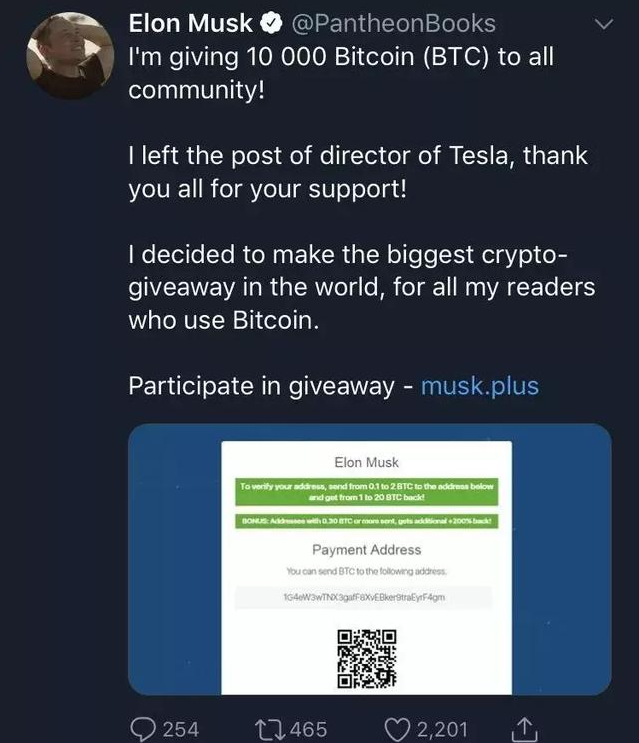 Counterfeiting of the Interpol-related bitcoin fraud in 2018
FBI Mail Incursion 2021: The Urlong Allegation by Hacker Pompopurin
The story: Hacker Pompompurin sent 100,000+false warning emails in the name of Homeland Security by hacking the FBI's Law Enforcement Enterprise Portal (LEEP) server. The e-mail accused Vinny Troia, founder of Dark Overlord, of being a member of the hacker organization, claiming that it was “a threat to the security of the system”, to a wide range of people, including Jay-Z, prominent journalists and others. What is even more absurd is that hackers have previously hacked child protection websites and maliciously framed Vinny Troia as a pedophile in an attempt to discredit their targets through multiple false accusations.
Breaking: This seemingly “official” e-mail attack reveals the truth — when law enforcement agencies investigate the threatening person, they will never make public the charges by mass e-mail, let alone send “criminal evidence” directly to unrelated persons. The FBI then made an urgent statement that it was only an external notification server that had been invaded and that internal data had not been leaked, and that the farce had eventually become a tool to show off hacker technology.
The commonality of deception: the ancestral formula of intimidation + seduction
Whether the “security account” in 2018 or the false accusation in 2021, fraudsters impersonating law enforcement agencies follow the same set of scripts: first, using “identity theft” to create panic (intimidation) and then dropping the bait (intribution) that “cooperate with an investigation would exonerate” from “return a high reward”. The core approach that runs through is to require victims to “secretly operate” — transfer funds, provide account information, and not tell anyone. Remember this anti-fraud formula.“But whoever claims to be a law enforcement officer and asks you to “discreetly transfer” “hidden operations” is an ancestral pattern of liars. Formal agency investigations will never allow citizens to transfer to strange accounts, let alone “clean up suspicion” in encrypted currency.
End of the promotion: You and I are Internet watchers. People
Today you've learned about a false wanted notice, and tomorrow you'll probably lose one of the companies to blackmail software. Cybercrime has never been a distant digital war, and when the attacks of the tritium organization indirectly caused the death of NHS patients, we finally understand that every seemingly unrelated cyber-fraud can be fatal in the real world. From a “debate attack” to an accurate scheme of the International Criminal Police Organization (Interpol) for the forgery of a wanted warrant, the means of fraud are becoming more and more hidden, but the most sophisticated disguise is beyond the eyes of the public.
In the face of suspicious information like "official notice" "urgent wanted", remember this.Three principlesIt helps you avoid 90% of the traps: not easily clicking on unofficial links, not transferring to strange accounts, not leaking personal sensitive information. Each of your verifications — such as calling an official phone call to confirm the authenticity of a “wanted order”, and each of the reports — through the APP of the National Anti-Fraud Centre, is adding bricks to the Internet security line.
Popular fraud is never a slogan. When we turn “credible, multi-verified” into a conditional reflection, when every family has an “anti-fraud propagandist”, the carefully designed play by the fraudster loses the stage. Now forward this article, @The friend in your micro-letter who used the "official announcement" as a message, let us use our collective awakeness, let the chorus attack go nowhere and make the Internet truly a safe home.
Interactive voting: anti-fraud capability test
You want to know if your anti-fraud radar is sensitive enough? Let's do a little test!
Which of the following are typical features of false wanted notices?
A. Payment of bonuses in United States dollars
B. Publication on the Interpol network
C. Requirement of transfers to “safe accounts”
D. Red wanted order number (e.g. 2025/XXX)
Think for three seconds. What's your answer?
Correct answer: C
Analysis: The core of a formal wanted notice is to inform the suspect and to call for assistance in his arrest, and there will never be a requirement for sensitive operations, such as transfers, for ordinary people. Remember this anti-fraud trick: "Any warrant that turns you on is a fraud!" A true judicial document will only prompt you to contact the police and will not direct any money transactions.
Is that right? If you choose wrong or wrong, don't worry, let's talk about how you're judging — what other “fake-and-a-fake” schemes have you encountered? Or share your little anti-fraud technique and get more people to practice "The Eye of Fire"!